
The Present and Future of AI in Design that Shapes Creative Work

AI has become one of the most significant trends in the modern creative industry. Artificial intelligence is transforming the way designers work, unlocking new possibilities for producing faster, more efficient, and relevant artwork. From generating visual concepts to automating prototype development, AI streamlines the entire design process while preserving strong aesthetic quality.
Many tools, including Adobe Firefly, Midjourney, and Canva Magic Studio, prove that AI can collaborate with designers in producing innovative artwork. Through trend analysis and user preference, AI has been a creative partner that supports each level of the design process.
This article will look at how artificial intelligence (AI) in design influences the direction and growth of the creative industry, both now and in the future. This article will look at the different roles AI plays in the design process, as well as its ability to foresee technological breakthroughs and their implications for the industry of design.
Table of Contents
The Roles of AI in Design
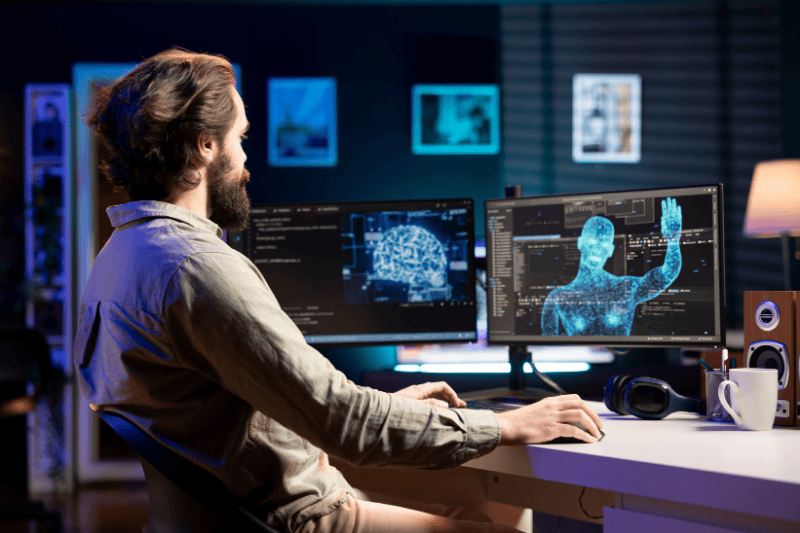
Nowadays, everyone knows how important AI in design fields is, starting from graphic design to UI/UX development. This technology helps designers work more efficiently by automating technical duties such as choosing colors and layouts and generating visual ideas. In branding and motion design, AI is also used to create a logo, animation, and visual campaign concept that is based on real-time audience preference.
Some popular tools lead this revolution, including Adobe Firefly, DALL·E, Midjourney, and Runway ML. Each of these tools offers new ways for designers to experiment, visualize ideas, and quicken the creative process without losing human artistic touch.
Implementing AI has a significant positive influence in the design field, particularly in terms of productivity, originality, and artwork customization. AI allows designers to focus on strategy and important ideas while an AI system handles technical procedures like data management, repetitive chore automation, and detailed design execution in the background. In today’s design environment, teamwork between humans and AI produces a new balance between productivity and artistic expression.
Key Advantages of Integrating AI in Design Tools
Integrating AI into design tools offers numerous advantages that can transform how designers work. This technology accelerates the creative process while unlocking new opportunities to deliver more personalized, adaptive, and impactful design experiences.
Here are some of the key benefits of using AI in the design industry.
- Efficiency and Automation of Repetitive Tasks
AI can handle technical tasks such as image resizing, color selection, and layout automation. These features allow designers to allocate less time to them and instead focus on ideas and creative tactics.
- AI-Assisted Ideation
With the help of AI, designers can explore various design alternatives in mere seconds. Tools, such as Midjourney and DALL·E, help generate quick visualization ideas that can become new references for designers.
- User Data-Based Adaptive Designs
AI is capable of analyzing user behavior and adjusting the design in real time. For example, the application interface can automatically change according to the user’s visual preferences or habits, creating a more personal and relevant experience.
Challenges and Ethical Considerations of Implementing AI
While incorporating AI into design offers numerous benefits, it also presents new challenges and ethical issues that require careful consideration. Hence, designers need to understand how AI affects originality, impartiality, and their professional responsibilities.
- The Risk of Plagiarism and Copyright
AI can generate designs from large datasets that may contain the works of other artists without permission. Furthermore, users typically cannot claim copyright for the design results generated by AI. This situation raises the question of who actually holds the copyright to the works produced by AI, whether it is the designer or the developer.
- The Algorithm Biases and Processes’ Transparency
Because AI learns from human data, bias in the data can influence the design outcomes. Unmonitored AI systems can create outputs that are exclusionary or culturally misrepresentative. As a result, transparency in the AI decision-making process is critical to ensuring that the design remains ethical and objective.
- The Maintenance of Originality and Human Touch
Along with the increase of AI, many worry that human creativity will be replaced. The biggest challenge for designers is utilizing AI without losing the emotional, intuitive, and artistic sensitivity distinctive to human traits.
The Future of AI in Design
The Prediction of Future Trends
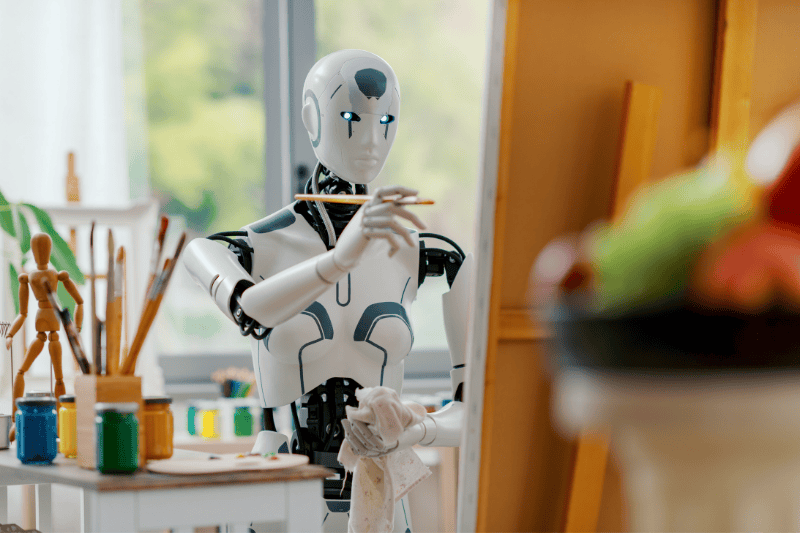
The advancement of AI is expected to bring about significant changes in the way designers perform their jobs. One of the trends is the introduction of AI as a co-designer, where it will no longer serve merely as a supporting tool. In fact, it will be an active collaborator, presenting alternative ideas, design recommendations, and automated adjustments based on user behavior.
Additionally, the adaptive interface concept will continuously grow in popularity. Interface design in the future will adapt in real time to users’ demands, preferences, and behaviors. Moreover, AI’s ability to generate creativity makes it possible to create unique and innovative designs that cross the boundaries of human creativity.
Long Term Impacts of AI to the Design Profession
The advancement of AI will significantly transform the design profession. AI can automate technical tasks such as layout creation, color matching, and prototyping. As a result, designers are able to focus more on strategic and conceptual work.
However, this also means that designers need to develop new skills such as algorithm understanding, data ethics, and the ability to collaborate with AI systems. In the future, the relationship between human and machine will become a new standard in the creative industry, in which AI becomes a support and not a human replacement.
Conclusion: Maintain Balance Between Creativity and Technology
In today’s design environment, maintaining a balance between human creativity and artificial intelligence is crucial. Even if AI can speed up the work process and generate new ideas, human roles will never be replaced since they offer context, emotions, and meaning in a design.
Future designers don’t need to see AI as a threat; they can view it as a collaborative partner that enhances their ability to create innovative and relevant work. When AI’s analytical power is combined with human imagination, it has the potential to reshape the creative industry and open new possibilities for a more adaptive and meaningful design future.
If you are a designer, the best step to take now is to start using AI wisely as a supporting tool—not as a replacement—and to continue honing your creativity, which cannot be replicated by any machine.
To gather in-depth and more curated design knowledge, you can explore various insights in nextdin.com.